Finding the Trusted Microsoft Dynamics 365 Consultant in the UAE: Complete Guide for 2026

Choosing a Microsoft Dynamics 365 consultant in Dubai affects more than just your software implementation. It determines whether your CRM and ERP systems actually improve operations or create new problems that slow your business down.
The UAE's digital transformation push has accelerated the adoption of cloud-based business solutions. Companies across Dubai and Abu Dhabi are moving away from disconnected systems toward integrated platforms. However, successful Dynamics 365 implementations require more than purchasing licenses. They need experienced consultants who understand both the technology and local business requirements.
This guide explains what separates compelling Dynamics 365 consulting from implementations that fail to deliver results. It covers the key modules businesses use, implementation approaches that work in the UAE, and the critical factors to evaluate when selecting a Dynamics 365 consulting partner.
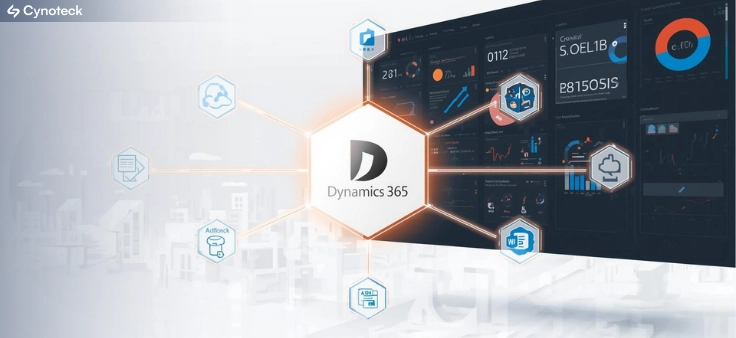
Microsoft Dynamics 365 brings together CRM and ERP capabilities into one cloud platform. Rather than managing separate systems for sales, customer service, finance, and operations, organizations work from unified data across departments.
The platform integrates with Microsoft 365, Power Platform, and Azure services. This creates connected workflows where data flows automatically between applications. Teams access real-time information without switching systems or manually updating spreadsheets.
See how the right Microsoft Dynamics 365 consultant in the UAE changes outcomes
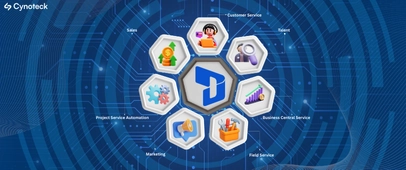
Talk to ExpertsBusinesses in Dubai use Microsoft Dynamics 365 to manage operations, improve customer engagement, and support rapid growth across industries like retail, real estate, finance, logistics, and government services. The most commonly adopted modules focus on finance, sales, customer service, and operations.
Dynamics 365 Business Central serves SMEs with comprehensive ERP functionality, managing financials, supply chain, inventory, and operations. UAE businesses use it to handle multi-currency operations, VAT compliance, and regional reporting.
Dynamics 365 Finance provides enterprise-grade financial management for larger organizations, supporting multi-entity operations and regulatory compliance across regions.
Dynamics 365 Sales automates sales processes with AI-driven insights that help teams prioritize activities and close deals faster.
Dynamics 365 Customer Service centralizes support across email, phone, chat, and self-service portals, routing inquiries based on agent skills.
Dynamics 365 Field Service optimizes scheduling for mobile workforces, managing work orders, technician scheduling, and asset maintenance.
Dynamics 365 Marketing enables targeted campaigns across channels and customer journeys that automatically respond to behaviors.
The UAE business environment creates specific requirements that generic Dynamics 365 knowledge cannot address. Consultants working in Dubai must understand the region's regulatory, operational, and technical factors.
1 VAT and Financial Compliance:
UAE VAT regulations affect how businesses configure financial modules. Consultants need practical experience implementing VAT-compliant solutions that correctly handle exemptions, reverse charges, and cross-border transactions. An incorrect setup creates compliance risks and reporting problems.
2 Multi-Entity Operations:
Many UAE businesses operate across multiple free zones or Emirates. Each entity may have different tax treatment, reporting requirements, and operational needs. Dynamics 365 implementations must support this structure while providing consolidated management visibility.
3 Multilingual and Multi-Currency Requirements:
Organizations serve customers speaking Arabic, English, and other languages. Systems need proper language support and right-to-left text handling. Multi-currency functionality must handle exchange rates, currency fluctuations, and accurately report in different currencies.
4 Data Residency and Privacy:
Some sectors in the UAE are subject to data localization requirements. Healthcare, financial services, and government contractors must ensure data stays within specific geographic boundaries. Consultants should understand Azure regions, data residency options, and compliance frameworks.
Also Read: Top 10 Microsoft Dynamics 365 Consultants in the UAE
Professional Dynamics 365 consulting goes beyond software installation. Comprehensive service portfolios support businesses through planning, implementation, and ongoing optimization.
1 Strategy and Planning:
Practical implementations begin with understanding business processes and goals. Consultants review current workflows, identify inefficiencies, and map how Dynamics 365 capabilities address specific challenges. This phase produces clear roadmaps showing which modules solve which problems, along with realistic deployment timelines.
Strategic planning identifies integration requirements early. Most organizations use multiple business systems. Consultants determine how Dynamics 365 connects with accounting software, HR platforms, eCommerce systems, and industry-specific applications.
2 Implementation and Configuration:
Implementation teams configure Dynamics 365 modules to match business processes. This includes setting up security roles, creating custom fields, building automated workflows, and designing reports that provide meaningful insights.
Professional implementations follow structured methodologies. Projects move through discovery, design, configuration, testing, training, and deployment phases with defined deliverables. This approach manages risk and keeps stakeholders informed about progress.
3 Customization and Development:
Standard Dynamics 365 features handle many requirements. However, unique processes sometimes need custom development. Consultants build extensions using Power Platform, custom APIs, or .NET code depending on requirements.
Quality customization follows Microsoft's best practices. Solutions maintain upgrade compatibility, perform efficiently, and include proper documentation. Poor customization creates technical debt that becomes expensive to maintain.
4 Data Migration:
Moving from legacy systems or spreadsheets into Dynamics 365 requires careful data preparation. Consultants extract data from source systems, clean inconsistencies, map fields to Dynamics 365 structures, and validate accuracy through testing.
Successful migrations preserve historical data while improving quality. Organizations eliminate duplicates, standardize formats, and enrich records during the transition. This provides a reliable foundation for reporting and analytics.
5 Integration Services:
Business applications work better when connected. Consultants integrate Dynamics 365 with email platforms, document management systems, eCommerce sites, and specialized industry tools.
Modern integrations use APIs and middleware platforms. Data flows automatically between systems without manual intervention. This reduces data entry errors and ensures teams work from the most up-to-date information.
6 Training and Adoption Support:
Technology delivers value when people use it correctly. Comprehensive training programs teach users how Dynamics 365 supports their specific roles. Training covers both basic operation and advanced features relevant to each department.
Adoption support continues after go-live. Organizations benefit from quick-reference guides, video tutorials, and ongoing coaching that help users become proficient with new systems.
7 Ongoing Support and Maintenance:
Systems need regular attention to remain effective. Support services handle user questions, resolve technical issues, apply updates, and monitor performance. Maintenance includes reviewing usage patterns and recommending optimizations as business needs evolve.
Also Read: Trusted & Affordable Dynamics 365 Consultant in the USA
Microsoft Dynamics 365 is widely adopted across industries that require strong financial control, customer engagement, and operational efficiency.
Professional Services firms use Project Operations to manage end-to-end project lifecycles, from planning and resource allocation to execution. This enables accurate time tracking, streamlined billing, and better visibility into project profitability.
Retail and eCommerce businesses rely on Commerce capabilities to manage inventory, pricing, and omnichannel sales across physical and digital touchpoints. Centralized customer data enables consistent, personalized shopping experiences.
Healthcare providers use Dynamics 365 to coordinate patient care, manage appointments, and streamline billing processes. The platform also supports compliance with data privacy and regulatory requirements critical to healthcare operations.
Financial Services organizations leverage Dynamics 365 to meet strict regulatory standards through compliance tracking and audit-ready reporting. Detailed data visibility supports risk management, governance, and informed decision-making.
Manufacturing and Distribution companies depend on Dynamics 365 for production planning, inventory control, and end-to-end supply chain visibility. This improves demand forecasting, reduces operational delays, and enhances supplier coordination.
Construction and Real Estate firms use Dynamics 365 to track projects, equipment usage, subcontractors, and financial performance. Mobile access enables field teams to stay connected, improving coordination and on-site productivity.
This industry knowledge ensures your Dynamics 365 solution fits your real workflows and challenges.
Structured implementation approaches reduce risk and improve outcomes. Professional consultants follow proven methodologies tailored to the project's scope and complexity.
Step 1: Discovery and Requirements
Implementation begins by documenting current processes and future state goals. Teams identify pain points, gather detailed requirements, and prioritize features. This creates shared understanding between consultants and business stakeholders.
Step 2: Solution Design
Design translates requirements into Dynamics 365 configurations. Consultants map business processes to system capabilities, design data structures, plan integrations, and create security models. Design documentation provides blueprints for configuration work.
Step 3: Configuration and Development
Technical teams build the solution in accordance with design specifications. Work includes configuring modules, creating custom fields and forms, building workflows, developing extensions when needed, and setting up integrations.
Step 4: Testing and Quality Assurance
Rigorous testing validates that systems work correctly. Testing covers functionality, integrations, data accuracy, performance under load, and security controls. User acceptance testing confirms the solution meets business requirements.
Step 5: Training and Change Management
Organizations prepare users for new systems through comprehensive training. Programs include role-based instruction, hands-on practice, and reference materials. Change management addresses concerns and builds confidence with new tools.
Step 6: Deployment and Go-Live
Deployment moves systems into production use. Consultants coordinate data cutover, manage go-live activities, and provide intensive support during early operation. Phased deployments reduce risk for complex implementations.
Step 7: Post-Implementation Support
The first weeks after go-live are critical. Support teams resolve issues quickly, refine configurations based on actual use, and provide additional coaching. Ongoing support continues as organizations expand usage and add capabilities.
This structured approach provides visibility, manages risk, and ensures nothing falls through the cracks.
Choosing consultants requires evaluating technical capability, business understanding, and service approach. Several factors help identify partners that deliver successful outcomes.
1 Microsoft Partnership and Certifications:
Microsoft partner status indicates commitment to the platform. Partners maintain certified consultants, demonstrate technical capability, and meet customer satisfaction standards. Check for Microsoft Solutions Partner status and specific Business Applications competencies.
Individual certifications show consultant expertise. Certified professionals complete training and pass exams covering Dynamics 365 modules. Teams should include consultants certified in the modules you plan to implement.
2 UAE Market Experience:
Local experience matters significantly. Consultants should demonstrate successful implementations for UAE businesses. Ask about specific challenges they've solved related to VAT compliance, multi-entity operations, and regional requirements.
Review case studies and client references from similar industries and company sizes. Understanding comparable implementations provides confidence in the consultant's capabilities.
3 Technical Expertise and Specialization:
Evaluate technical depth across the services you need. Strong consultants demonstrate expertise in module configuration, integration capabilities, customization approaches, and data migration methods.
Specialists typically deliver better results than generalists. Consultants who focus exclusively on Microsoft Dynamics develop deeper knowledge than those who spread resources across multiple platforms.
4 Implementation Process:
Ask about project approaches and governance. Professional consultants follow structured methodologies with clear phases, deliverables, and decision points. Methodology should include risk management, change control, and communication frameworks.
Request examples of project documentation, timelines, and deliverables from past implementations. Quality planning indicates organized execution.
5 Support and Maintenance Services:
Understand support offerings available after implementation. Comprehensive support includes help desk services, issue resolution, system monitoring, and regular health checks. Clarify response times, support hours, and escalation procedures.
Maintenance should cover applying updates, optimizing performance, and evolving functionality as needs change. Long-term partnerships deliver better value than transactional implementations.
6 Pricing Models and Transparency:
Consultants use different pricing approaches. Fixed-price works for well-defined projects with a clear scope. Time-and-materials suits projects where requirements evolve. Managed services provide predictable ongoing costs.
Transparent pricing breaks down costs by activity. Detailed proposals show effort estimates for each phase, clearly define what's included and excluded, and explain how changes affect pricing.
7 Communication and Project Management:
Effective communication prevents misunderstandings and keeps projects on track. Consultants should provide regular status updates, assign dedicated project managers, respond promptly to questions, and maintain accessible project documentation.
Ask about communication tools and meeting frequency. Remote implementations need strong virtual collaboration capabilities.
Also Read: Top 10 Microsoft Dynamics 365 Consultants in the USA
The cost of a Dynamics 365 project goes beyond just licensing. It depends on how the solution is scoped, implemented, customized, and supported over time. Understanding these cost components early helps businesses plan realistically and avoid budget overruns during implementation.
1 Licensing Costs:
Microsoft licenses Dynamics 365 per user with different tiers. Business Central starts at $70 per month for essential capabilities. Full licenses for Finance, Sales, or Customer Service range from $65 to $210 monthly, depending on features.
2 Implementation Services:
Simple Business Central deployments might require 200-400 hours. Complex enterprise implementations can exceed 2,000 hours. Consultant rates in Dubai typically range from $100 to $200 per hour.
3 Customization and Integration:
Custom development adds cost based on complexity. Simple extensions might require 40-80 hours. Complex modules can take several hundred hours. Each integration has different effort requirements.
4 Training and Ongoing Support:
Budget for role-based training covering all users. Annual support typically costs 15-20% of implementation expense, covering help desk services, maintenance, and minor enhancements.
Work with a Dynamics 365 consulting team in the UAE that gets ERP and CRM right early
Book a Free ConsultationImplementing Microsoft Dynamics 365 in the UAE offers significant benefits, but organizations often face practical challenges that can affect timelines, budgets, and user adoption. These challenges are usually tied to regulatory requirements, data complexity, and organizational readiness rather than the technology itself.
Scope Creep happens when requirements aren't fully defined upfront. Formal change control processes manage scope while preventing delays.
Data Quality Issues create migration problems. Starting data assessment early identifies issues before they delay go-live.
Integration Complexity increases with multiple systems. Testing integrations thoroughly prevents production problems.
User Resistance to change is natural. Effective change management addresses concerns and demonstrates benefits.
Unrealistic Timelines compromise quality. Realistic planning accounts for the proper execution of each phase.
With over 16 years of Microsoft platform experience, Cynoteck has delivered Dynamics 365 implementation services across diverse industries. The company maintains Microsoft Partner status and has certified consultants across the Finance, Business Central, Sales, Customer Service, and Field Service modules.
Cynoteck's service portfolio includes strategic consulting and planning, end-to-end implementation, system customization and development, data migration from legacy systems, integration with third-party applications, user training and adoption support, and ongoing maintenance and support services.
The company serves clients in professional services, healthcare, retail, financial services, manufacturing, and construction sectors, with offices supporting customers across the United States, the UAE, and India. Their implementation approach combines Microsoft's best practices with practical business experience.
Different businesses have different needs, and Dynamics 365 delivers the most value when it is aligned with company size and complexity. Cynoteck designs solutions that fit both growing organizations and large enterprises, ensuring the system supports operations today and scales for the future.
SMEs need robust systems without unnecessary complexity. Cynoteck often recommends Dynamics 365 Business Central for small and mid-sized businesses because it combines financial management, supply chain, and operations into a single, easy-to-manage platform.
Cynoteck supports SMEs with:
Business Central implementations tailored to core business processes
Cloud migration services that replace on-premise systems with secure, scalable cloud environments
Power Apps extensions to add functionality without heavy customization
Affordable support models that keep ongoing costs predictable
This approach helps SMEs improve efficiency, gain visibility, and scale confidently.
Large organizations require advanced ERP capabilities to manage complexity across regions, entities, and business units. Cynoteck specializes in Dynamics 365 Finance & Operations, built for enterprise-level requirements.
Enterprise solutions include:
Multi-entity and multi-currency deployments for global and regional operations
Enterprise-grade integrations with legacy systems and specialized platforms
Dedicated support teams to ensure performance, compliance, and continuous improvement
By combining technical depth with structured delivery, Cynoteck enables large enterprises to run Dynamics 365 at scale with confidence.
Investing in Microsoft Dynamics 365 delivers value only when the platform is aligned with real business outcomes. Maximizing ROI is less about deploying every available feature and more about using the right capabilities at the right time to improve efficiency, decision-making, and customer experience.
Practical Ways to Maximize ROI:
Define Clear Success Metrics: Establish quantifiable goals like reduced processing time, improved satisfaction scores, or lower operational costs before implementation.
Prioritize User Adoption: Systems deliver value when people use them consistently. Invest in training, address concerns, and celebrate early wins.
Leverage Built-In Capabilities: Explore standard features before requesting customization. Using out-of-the-box capabilities reduces costs and simplifies upgrades.
Plan for Continuous Improvement: View implementation as a starting point. Regular reviews identify optimization opportunities.
Integrate with Microsoft Tools: Connect with Microsoft 365, Power BI, and Power Platform to maximize investment value.
A: Simple Business Central deployments take 8-12 weeks. Complex enterprise implementations may require 6-9 months, depending on scope and modules.
A: Professional services, retail, healthcare, financial services, manufacturing, and construction companies gain significant value from integrated CRM and ERP capabilities.
A: Simple implementations start around $30,000-50,000. Mid-sized projects range from $75,000 to $ 150,000. Large enterprise implementations can exceed $300,000 depending on modules and customization.
A: Yes. Modern APIs connect Dynamics 365 with accounting software, HR systems, eCommerce platforms, and industry-specific tools.
A: Ongoing help desk support, system monitoring, user training, applying updates, and optimizing configurations as processes evolve.
A: Cynoteck brings 16+ years of specialization, certified experts, affordable pricing, and a strong track record of delivering successful CRM and ERP projects tailored for UAE businesses.
Move forward with a Microsoft Dynamics 365 consultant focused on long-term business value
Connect with CynoteckMicrosoft Dynamics 365 provides UAE businesses with robust capabilities for managing operations, customers, and financials through integrated cloud applications. Success depends on selecting experienced consultants who understand both the technology and local business requirements.
Effective implementations begin with clear goals, follow structured methodologies, prioritize user adoption, and include ongoing support. Organizations that view Dynamics 365 as a platform for continuous improvement rather than one-time software installation achieve the greatest returns.
The right Dynamics 365 consulting partner brings technical expertise, business understanding, and commitment to your success. Take time to evaluate options thoroughly, check references carefully, and choose partners focused on delivering measurable business outcomes.
Whether you are planning a new Dynamics 365 implementation or looking to improve an existing setup, the right strategy makes all the difference. Align Dynamics 365 with your business goals, streamline adoption, and unlock measurable ROI with expert guidance.

Microsoft Dynamics 365 vs Microsoft Power Apps. Explore their key differences, real-world use cases, pricing insights, and expert guidance from Cynoteck to help you choose the right Microsoft solution in 2026.
.webp)
Explore the top Microsoft Dynamics 365 consulting companies in 2026. Compare expertise, services, and ROI to find the best partner for your digital transformation.
We are more than just developers and consultants—we are your partners in navigating the digital landscape. Let us be the engine behind your next big success while you focus on your core vision.
Explore Opportunities!